
Posted on October 13, 2026
Glenda Webb | Business & Lifestyle Lab
Get local business support | Increase the revenue and expand your business in Florida
Getting dental work done abroad used to feel like a last resort for people who had run out of options at home. That’s changed. A growing number of US patients now treat international dental care the same way they treat any significant purchase: researching providers, comparing prices, and choosing based on quality rather than proximity. Orto Nova in Croatia is one clinic drawing serious patient interest from outside Europe, and it’s not hard to see why once you look at what the experience actually involves.
For patients who need substantial dental work, the economics of travel often tip the decision. A complete smile restoration in the US runs anywhere from $20,000 to $45,000 depending on the scope of the work. The same procedures in Croatia regularly land at 40 to 60 percent of that figure, even after flights and accommodation are factored in. For self-employed people and small business owners without dental coverage, that’s frequently a $15,000 difference, and it changes how people think about what’s practical.
The Cost Gap That’s Driving the Decision

The price difference between dental care in the US and Croatia comes down to overhead, not quality. Croatian dentists train under rigorous EU standards and use the same materials and equipment found in well-equipped American practices. What they don’t carry is a $40,000-a-month rent bill for a suburban clinic and a large administrative staff dedicated to processing insurance claims all day.
A single dental crown in the US averages $1,300 to $2,500. In Croatia, zirconia or porcelain crown options typically run $200 to $400. Multiply that across a full-mouth case involving eight to twelve crowns plus implants, and the numbers compound quickly. Patients who need bone grafting, extractions, and final prosthetics bundled together frequently save more than $15,000, even including a full week abroad.
The National Institute of Dental and Craniofacial Research notes that finding quality dental care involves carefully researching provider credentials and understanding treatment costs, advice that holds equally when evaluating international options. Croatian clinics targeting international patients have adapted to this scrutiny by publishing detailed price lists and offering free remote consultations before any travel is committed to.
What a Typical Treatment Timeline Looks Like
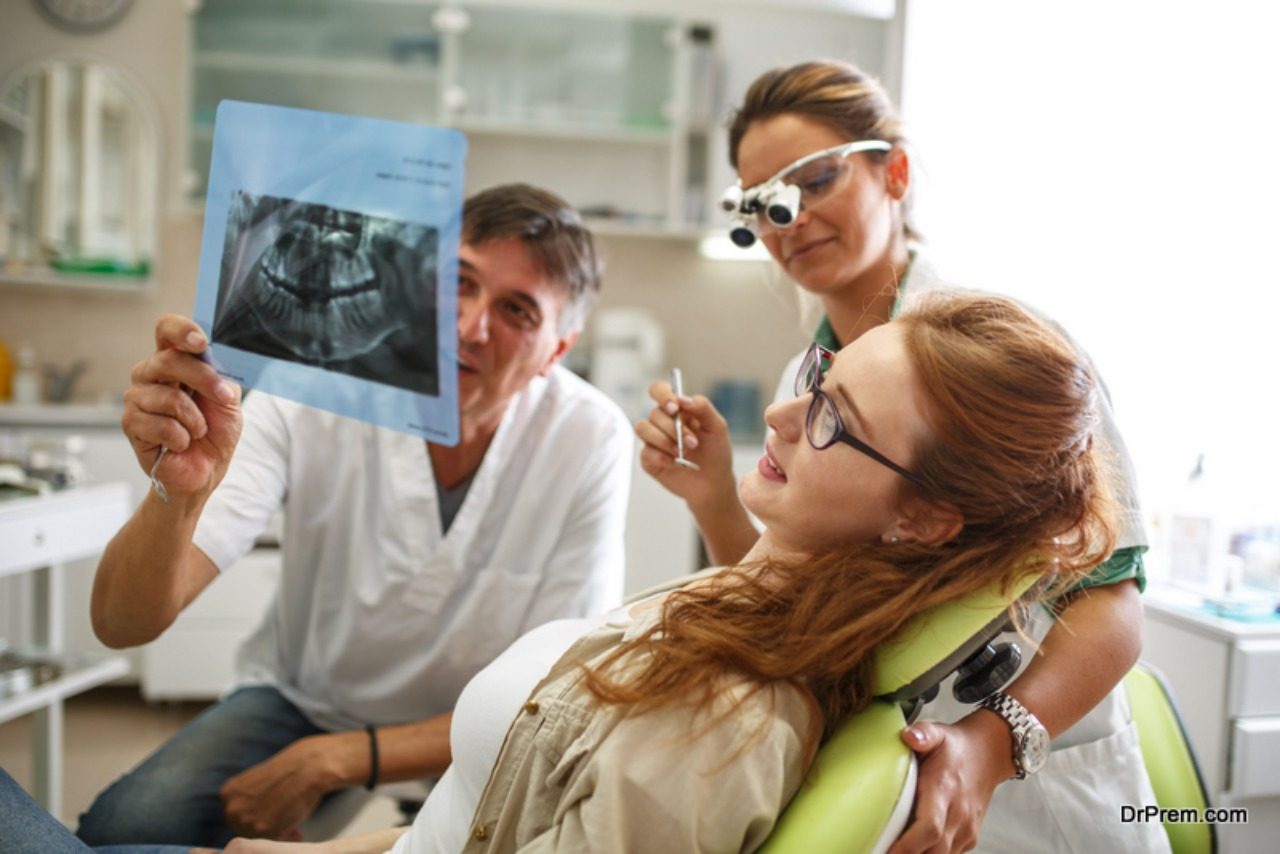
Most international dental patients book two separate trips. The first handles diagnostics: a cone beam CT scan, impressions or digital scans, X-rays, and a detailed treatment plan signed off by the treating dentist. Some clinics offer remote pre-consultations where you submit prior X-rays and get a preliminary quote before committing to any travel.
The second trip is where the actual work happens. Depending on complexity, this runs anywhere from three days for crowns and veneers to ten days for full-arch implants, which require healing time before permanent prosthetics are placed. A few clinics offer same-day procedures for less invasive cases, but full restorations need time and compressing the process into a single trip is not a good trade-off.
For most working adults, the scheduling proves less disruptive than expected. The diagnostic trip can be a long weekend. The treatment trip often overlaps with a planned vacation, since Croatia’s Adriatic coast is not a hardship destination. Patients regularly describe the combination of dental care and a week in Split or Dubrovnik as a reasonable arrangement rather than a sacrifice.
How to Vet a Clinic Before You Book
Not every dental tourism clinic in Croatia operates at the same level, and the good ones expect you to push back with questions. Start by verifying whether the clinic is transparent about which dentists handle which parts of your treatment. Some practices subcontract portions of the work to affiliated providers. That’s not necessarily a problem, but you should know about it before your flights are confirmed.
Ask which implant brand the clinic uses. Reputable providers work with recognized systems: Nobel Biocare, Straumann, Zimmer Biomet. These have global service networks, meaning a dentist back home can manage any follow-up or adjustment without needing proprietary parts. A clinic that can’t name its implant brand is worth moving past.
Reviews on third-party platforms tell you more than testimonials on a clinic’s own site. Patient forums like Dental Departures and Reddit communities on dental tourism give you the unfiltered version, including how the clinic handled complications when they arose. The CDC’s oral health data consistently shows that gaps in access to dental care drive poor outcomes, which is exactly why the same evidence-based approach to evaluating providers applies whether the clinic is in Tampa or Zagreb.
The Quality Question: Croatian Dentistry vs. US Standards
Croatia’s dental education is a six-year degree program, comparable in clinical hours and depth to programs in Germany and Austria. Dentists who work with international patients often pursue additional training in implantology or prosthodontics, and many have completed portions of their clinical development at practices across Western Europe before returning home.
The regulatory side runs through the Croatian Dental Chamber, which oversees licensing requirements, continuing education, and professional conduct standards. Since EU accession, practices routinely treating patients from other European countries have operated under a level of external scrutiny that simply doesn’t apply to clinics serving only a local market.
The materials are, in most cases, the same ones used in the US. Zirconia blocks for crown milling come from the same German and Swiss manufacturers supplying clinics in New York or Dallas. Implant systems, imaging equipment, sterilization protocols, digital workflow software: the supply chain is global. Lower costs reflect what it costs to run a practice in a country where rent and labor are a fraction of American equivalents.
Practical Logistics: Travel, Recovery, and Follow-Up Care
Getting to Croatia from the US typically means a connection through Amsterdam, Frankfurt, Vienna, or Rome. Budget 12 to 16 hours of travel each way. Most patients flying for dental work arrive the day before their first appointment to offset jet lag, especially before a procedure that involves detailed communication with the clinic team.
Recovery depends on the procedure. Crowns and veneers leave most patients functional within 24 hours. Full implant surgeries involve several days of swelling and sensitivity, with soft foods recommended for a week or two afterward. Building in three or four days of low-activity time near the clinic before flying home reduces discomfort and catches any immediate issues before you’re over the Atlantic.
Follow-up care back home is the part most people underestimate. Croatian clinics typically provide complete treatment summaries and digital records that any local dentist can work from. The practical move is to identify that local dentist before you travel, confirm they’re willing to handle any follow-up, and bring their contact information to Croatia so the treating clinic can coordinate directly if needed.