
Posted on August 21, 2026
Glenda Webb | Business & Lifestyle Lab
Get local business support | Increase the revenue and expand your business in Florida

Mexico has become a serious investment destination for Americans, and not just retirees or digital nomads. Entrepreneurs based in Florida, Texas, and California are looking south, drawn by lower entry prices, favorable exchange rates, and a lifestyle appeal that can make a second property feel like a genuine asset rather than a pure expense. San Miguel de Allende, Puerto Vallarta, and Tulum have all developed sophisticated real estate markets with international buyers in mind. Agencies like Berkshire Hathaway Colonial Home Services work specifically with U.S. buyers in these markets, providing the professional structure that Americans expect when committing serious capital.
Still, buying real estate in Mexico as a foreigner involves a set of legal and financial procedures that have no direct equivalent in a standard U.S. transaction. The closing process, fee structures, and title mechanisms operate on entirely different logic. Understanding these differences before you start seriously shopping will save you from surprises that have tripped up plenty of well-prepared buyers.
Understanding the Fideicomiso: Mexico’s Trust Structure for Foreign Buyers

When foreigners want to buy property within 50 kilometers of a Mexican coastline or 100 kilometers of a border, they can’t hold title directly. Mexican law routes ownership through a bank trust called a fideicomiso, where the bank holds legal title while the buyer holds all beneficial rights: the right to use, rent, sell, modify, and pass the property to heirs. The trust is issued for 50-year terms and renewable indefinitely. In practical terms, it functions as ownership in all but name, with a bank serving as the legal title holder.
This matters for business owners because the fideicomiso carries annual fees, typically between $500 and $1,000 USD, paid to the trustee bank. These show up at closing as part of the initial cost structure and continue every year thereafter. Some buyers are surprised to find this wasn’t disclosed upfront, but any reputable agent will walk through it as part of the transaction. Understanding the fideicomiso early helps you evaluate whether a coastal property’s listed price reflects what you’ll actually pay in year one.
Where Americans Are Actually Buying (and Why It Matters)

The popular narrative around Mexican real estate focuses on beach towns. That captures part of the market but misses a lot. Interior cities have attracted a steady wave of American buyers who are less interested in vacation rentals and more focused on long-term appreciation or lifestyle relocation. San Miguel de Allende, a UNESCO World Heritage city in Guanajuato, has one of the most developed expat real estate markets in the country. Property values there have risen consistently over the past decade, driven partly by sustained American and Canadian demand.
The coasts are a different calculation. Los Cabos, Puerto Vallarta, and the Riviera Maya still draw the largest volume of U.S. buyers, and the vacation rental income potential is real. But pricing in those areas has increased substantially since 2020, and inventory at the entry level has thinned. Buyers who did their homework in 2018 or 2019 found meaningfully better prices than those entering now. That gap is one reason inland markets have started gaining more attention from investors who missed the earlier coastal window.
What Due Diligence Looks Like South of the Border

Due diligence on a Mexican property isn’t dramatically different in spirit from a U.S. process, but the tools and institutions are different enough to require real preparation. Title insurance exists in Mexico (U.S. carriers operate there), and it’s worth carrying even if your notario says it isn’t necessary. The notario publico plays a different role than a U.S. notary; they’re a state-appointed legal professional who verifies the transaction, handles registration, and collects transfer taxes. Their involvement is mandatory, not optional.
Before signing anything, have an independent Mexican attorney review the purchase agreement. Not an attorney referred by the seller, and not the notario’s firm. It costs a few hundred dollars and surfaces issues that would otherwise appear during or after closing. Run a title search through the Registro Publico de la Propiedad to check for liens, encumbrances, or ownership disputes. This kind of overseas transaction is exactly the context where the FTC warns investors to stay vigilant about pressure tactics and deals that seem structured to rush your decision.
The Tax Picture for U.S. Citizens Who Own Mexican Property
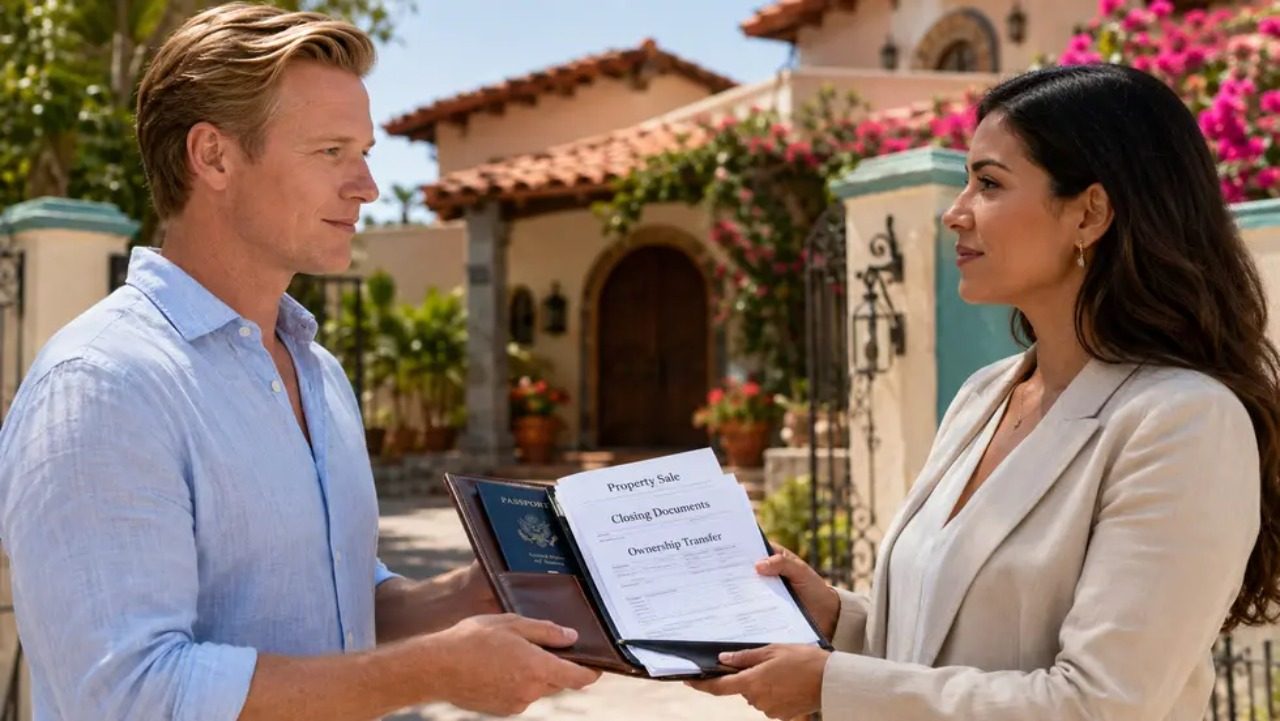
American citizens owe U.S. taxes on worldwide income, which means rental income from a Mexican property gets reported to the IRS whether or not you receive it in a U.S. account. The good news is that most of the normal deductions apply: property management fees, maintenance costs, depreciation, and mortgage interest if financed. The IRS guidance on rental income and expenses covers these deductions in detail and applies to foreign rental properties exactly as it does to domestic ones.
The Mexican side has its own tax layer. Property taxes in Mexico are low compared to U.S. rates, often under 0.1% of assessed value annually. But when you sell, Mexico collects a capital gains tax. Sellers can claim an exemption based on the years of ownership and use of the property, but only if certain conditions are met, including Mexican residency status. This is the piece most U.S. buyers fail to plan for at the start, and it can significantly affect the net return on an eventual sale.
Finding the Right Agent and Closing the Deal
Mexico doesn’t have a centralized MLS system the way the U.S. does. Listings are fragmented across agencies, and the same property often appears with different prices depending on which agent you approach. Working with an established agency that handles foreign buyers reduces this information gap considerably; they know which listings are priced accurately and which have inflated margins built in for negotiation room.
Closing costs in Mexico run higher than most Americans expect, typically between 4% and 8% of the purchase price depending on location and transaction structure. These include notario fees, acquisition tax (ISAI), and the first year of fideicomiso setup costs if you’re buying in a restricted zone. Budget for this before you fall in love with a property. The closing process, once all paperwork is in order, typically takes four to eight weeks, which is slower than U.S. timelines but not unreasonably so for an international transaction.