
Posted on December 24, 2025
Glenda Webb | Business & Lifestyle Lab
Get local business support | Increase the revenue and expand your business in Florida
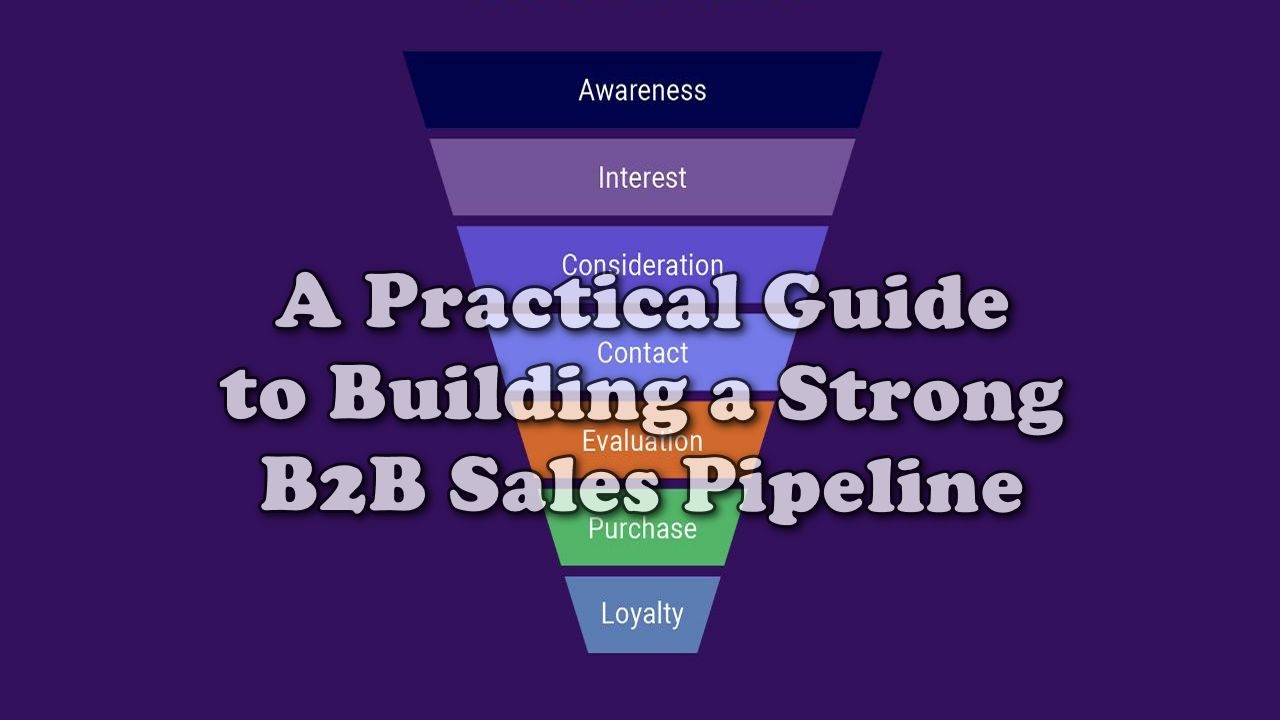
Most B2B pipelines do not fail because teams lack effort. They fail because teams lack a system that turns daily activity into predictable revenue. A strong pipeline comes from clear targeting, disciplined execution, and consistent deal movement. It also comes from leadership that treats the pipeline as an operating asset, not a dashboard screenshot.
If a team needs help kickstarting top-of-funnel volume, resources like https://salesroads.com/lead-generation-services/ can support outreach while leaders build internal process muscle. Still, the real win comes from a pipeline machine that your team can run every week, quarter after quarter, with clean handoffs and tight feedback loops.
Start With a Buyer Map, Not a Product Pitch

A pipeline gets stronger when you aim at a tight buyer map. Start by naming the segments that you can win, then define the buying group inside each segment. For example: the economic buyer who controls the budget, the champion who feels the pain daily, the technical evaluator who checks fit, and the blocker who worries about risk. Give each role a simple one-page profile: top priorities, common objections, and the trigger events that push action. When reps know who sits at the table, they stop spraying messages and start earning replies.
Next, anchor your messaging to outcomes and constraints. Outcomes include faster cycle time, fewer errors, higher conversion, lower churn, cleaner compliance, or lower total cost. Constraints include security reviews, procurement rules, integration limits, change-management fatigue, and internal politics. A rep who speaks to both wins faster. They show buyers a safer path, not a louder pitch. That shift changes everything, from email copy to discovery questions to how a rep frames a next step.
Finally, keep your ideal customer profile tight enough to act on. Many teams write an ICP that reads like a market report. Instead, write one that helps a rep pick accounts today. Specify firmographics, the tech environment you fit best, and the “why now” signals you can spot in public. Then build an exclusion list. When you say no to bad-fit accounts early, you protect rep time and forecast quality later.
Set Pipeline Targets With Simple Math and Clear Guardrails
Pipeline targets work best when leaders tie them to capacity and conversion, not hope. Start with a revenue goal for a segment, then divide by average deal size to get needed closed deals. Divide again by your win rate to get needed late-stage opportunities. Work backward through your funnel conversion to calculate how many qualified meetings and new opportunities you need each month. This math exposes gaps fast, and it stops the cycle of “we need more leads” without a plan.
Add guardrails that keep the math honest. Track sales cycle length by segment and product line, then set stage aging limits that match reality. If your average cycle runs 90 days, a deal that sits in early stage for 60 days signals a quality problem or a rep execution problem. Guardrails help managers coach with facts. They also prevent the classic forecast trap where old deals linger and inflate coverage.
Then translate targets into weekly activity that fits rep capacity. Do not drown the team in vanity goals like “100 calls a day.” Instead, define a small set of controllables: new accounts touched, new buying-group contacts added, meaningful conversations started, meetings set, and opportunities created. Pair each with quality standards. A meeting only counts when a rep confirms a real problem, a defined stakeholder, and a next step with a date.
Create a Repeatable Prospecting Engine Across Channels

A prospecting engine needs structure, variety, and a feedback loop. Structure means reps follow a weekly rhythm: account research, list building, outreach, follow-up, and referral taps. Variety means they combine email, phone, LinkedIn, events, partner intros, and customer-based signals. The goal is not channel perfection. The goal is consistent contact with the right people in the right accounts, with messages that sound like they came from a thoughtful human.
Build sequences around account realities, not generic templates. Start with a “reason to reach out” that fits the segment. Use a trigger event such as a new executive hire, a public expansion, a product launch, a compliance deadline, or a visible change in tech stack. Then lead with a point of view. Share a pattern you see in their space, a risk you see teams miss, or a quick benchmark. Keep it specific. When your message could apply to any company, it will land with no company.
Make follow-up smarter, not louder. Each touch should add new value: a short story from a similar team, a question that surfaces priorities, a micro-insight, or a clear suggestion for a small first step. Reps should rotate angles across the buying group. A champion might care about speed and friction. A finance leader might care about cost and predictability. A security leader might care about controls and auditability. When a rep keeps the story consistent while tailoring the emphasis, they look credible and prepared.
Qualify Fast and Run Discovery That Earns Next Steps
Qualification protects your pipeline from clutter. Do it early and do it with respect. A rep should confirm four basics quickly: a real business problem, a credible path to budget, access to decision-makers, and a timeline driven by a trigger. If any element looks weak, the rep should either fix it fast or disqualify. That is not harsh. That is professional. Buyers appreciate clarity, and reps gain time back for higher-value deals.
Discovery should feel like a working session, not an interrogation. Start with context: “Here’s what we see in teams like yours.” Then ask questions that surface impact: What breaks today? What does it cost in time, revenue, risk, or customer experience? What happens if nothing changes in 90 days? Keep questions short. Let buyers talk. Then reflect back what you heard in plain language, and ask for confirmation. When buyers hear their world described accurately, they lean in.
Close discovery with a concrete next step that matches the buying motion. If the next step is a demo, tie it to their priorities and invite the right stakeholders. If the next step is a pilot, define success criteria and ownership. If the next step is an executive review, outline decisions that meeting should produce. A “next week sometime” follow-up creates drift. A calendar-held next step with a clear purpose creates momentum.
Advance Deals With Multithreading, Mutual Plans, and Proof
Late-stage pipeline strength comes from deal leadership, not charm. Multithreading means a rep builds relationships across the buying group so the deal does not depend on one champion. It also means the rep maps influence and risk. Who signs? Who can stall? Who can kill the deal quietly? A rep should name these roles, then create a plan to engage each one with the right message and artifact.
Mutual action plans move deals forward without pressure tactics. A rep can draft a simple plan with milestones: stakeholder alignment, technical review, security and legal, procurement steps, and a target start date. Each milestone needs an owner and a date. This plan becomes a shared operating document. It keeps both sides honest. It also flushes out hidden objections early, while the rep still has time to address them.
Proof should match the buyer’s risk profile. Some buyers want ROI numbers. Others want operational credibility. Others want security and confidence. Reps should prepare a proof stack: a relevant case story, a quantified impact model, a reference call option, an implementation outline, and clear answers to common security questions. The goal is not a pile of assets. The goal is the right proof at the right time, delivered in a way that helps the buyer sell internally.
Keep the Pipeline Clean With Weekly Operating Rhythm and Metrics
Pipeline hygiene is a leadership habit. Run a weekly pipeline review that focuses on movement, not storytelling. Start with new opportunities and stage changes. Then review aging deals and stalled next steps. Managers should ask direct questions: What changed since last week? Who did you speak with? What decision will the buyer make next, and on what date? If a rep cannot answer, the manager should coach toward a clear action or a clean exit.
Use metrics that diagnose, not shame. Track stage-to-stage conversion, time in stage, meeting-to-opportunity rate, opportunity-to-win rate, and average deal size by segment. Add one quality metric: the percentage of deals with a documented buying group and a dated next step. These metrics spotlight coaching needs. They also reveal process bottlenecks such as slow security reviews, weak champion access, or poor qualification upstream.
Finally, build a culture that rewards truth in the pipeline. Reps often cling to weak deals because they fear judgment. Leaders can fix that by celebrating clean disqualification and fast learning. When a rep exits a deal with a clear reason, the team gains signal. Marketing refines targeting. Enablement updates messaging. Product learns where fit breaks. Over time, the pipeline becomes smaller, stronger, and far more predictable.